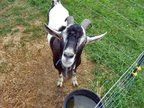
Goat keeping or goat farming is not actually rocket science, and there are indeed basic goat care ideas that many may not be aware about.
In fact, basic goat care is actually pretty simple, sometimes trivial, but never too tricky or tedious…all it needs is practical know –how and common sense.
First and foremost, if you happen to supplement grass feeding with mineral or nutrient infused feeds, always read the label and never – ever – feed sheep feed to goats, same goes the other way around.
Sheep and goats are entirely different animal species, with entirely different characteristics, nutritional requirements and environmental needs.
Never feed bucks or wethers with grain products, which in raw form cannot be tolerated by their metabolism, but if you feel and see that the your bucks require supplementation, make sure to consult a veterinarian, who would recommend grain pellet feed specifically for bucks. Although grain products are good for does, it works otherwise for bucks.
Dry oatmeal is also a good choice, but should only be taken in moderation.
Goats, like dogs, love treats with a bit of variation like fallen tree branches, especially aromatic ones, grapes, raisins, bread, soda crackers and their favorite - animal crackers.But make sure not to overdo giving treats since it can be dangerous to their health.
Always make sure to feed fresh and nutritious hay - with or without alfalfa – as needed. Fresh hay or grass is also loaded with natural minerals and nutrients that can help prevent diseases.
Do not forget to provide clean water and fresh water in a clean bucket, which during winter, should also be ice free.
You may also want to have loose minerals or mineral block available at all times and accessible to your goats. Salt can also be made available in a separate feeding dish or as a feeding block.
For does, also make sure to have a well balanced grain product handy at all times. It gives does added nutrients & minerals needed to stay healthy and helps in having healthy offspring.
It is easy to feed your does with grain, so always watch your animal’s condition to determine how much or how little they may need. Same way with supplementing lactating does with more protein, since this is important in their milk for young kids.
Be reminded that hoof trimming is necessary every 4 to 6 weeks, to keep your animal from developing hoof rot or leg and hoof issues.
Have your goats vaccinated annually with tetanus shots, as well as Bo-Se and Copper supplements as needed.
Here’s another funny yet important fact, to make sure that every goat comes running during feed time, otherwise, something may be wrong.
Another tip at watching your goat’s condition is to check their coat. A coarse, dull, or thin coat can give you many clues from stomach or intestine parasites to nutrient deficiency.
Finally, look for signs of legs bowing (back or inward), since this can indicate a nutrient deficiency.
These are but some of the basic goat care ideas that many may not be aware about, but will surely be of good help in caring for your goats and knowing what signs to look out for.
Selengkapnya...
Friday, September 3, 2010
Basic Goat Care Ideas That Many May Not be Aware About


Saturday, August 28, 2010
A Short Guide On Goat Care

Today, more and more people are discovering the fun in raising goats. It was not too long ago when goats are among the lowest on the list of pet animals. Now, raising goats are suddenly on the upswing, either as pets or even as a business. Unfortunately, many people do not know a whit about proper goat care.
Thanks to dedicated farmers and other goat lovers, taking care of goats are discovered to be not that difficult.
Short history
Goats are said to be one of the oldest animals domesticated by man. They provide milk, meat, hair and skin. Aside from drinking, goat’s milk can be processed into butter, ice cream and cheese.
The bucks (males) have strong smell and will affect the milk of does (females) if they are not separated. The kids (young goats) are playful and curious and can be trained not to fear people. The wethers are castrated males.
Food
For non-free range goats, feeding is done twice daily. Some raisers mixed their own goat food consisting of crimped oats, dairy goat pellets and some sunflower seeds.
There must be water for them all throughout the day. (Cool fresh water in summer and warm water in winter.)
Goats must also have hay available to them all day. Raisers usually provide a mixture of alfalfa, Timothy and orchard grass. Food and water must be placed on sturdy upraised feeders where the goats cannot soil them.
Since they are browsers, goats are ideally raised free-range where they rummage through all kinds of grass, leaves, and bush plants. Carefully check which plants in the area are toxic to them.
Shelter
Goats hate rain and mud. They need a proper shed to protect them from rain, snow and (cold) wind.
Some owners keep cabinets inside these shelters for goats to sleep off the ground. Goats love warm and dry places. It is important to keep these places always clean and dry to keep off bacteria.
Outside these shelters, there should be some place for your non-free range goats to roam and frolic. A small rock pile and some other objects for them to play-jump with would be ideal.
Health
Kids (young goats) should be properly immunized, usually with Bar-Vac CDT (clostridium perfringens types C & D tetanus toxoid). At one year old (and every year thereafter), they should get a booster Bar-Vac CDT injection.
They need to be de-wormed at least four times a year. De-wormers also kills external parasites (lice, ticks, fleas, etc).
Don’t overfeed your goats because they will accumulate gas. (Baking soda usually relieves this.) Baking soda helps goats in their digestion and keeping in check their urine acidity. Goats know when they need to eat baking soda and how much they need.
A healthy goat has bright eyes, smooth and shiny coat, with a good appetite, and alert. Teary or cloudy eyes might mean infection.
A dull coat might mean they have parasites. Hunched backs and droopy tails indicate something is wrong, especially if they refuse to eat.
Other tips
Never raise a single goat. Goats are herd animals. Keep as many as you can. They have different personalities, are affectionate, and hang around people to get a good scratch. Goat care is not a chore.
Selengkapnya...